Workshop Description
The software engineering community has a robust history of symbolic techniques, such as formal methods and programming languages. More recently, it has rapidly embraced machine learning techniques for tasks like automated program repair, program synthesis, code generation & summarization, validation & verification. Meanwhile, there is growing interest in combining the strengths of symbolic and learning techniques for the engineering of complex systems, for instance, feedback & human-in-the-loop mechanisms, and multi-agent systems. On the tooling side, there are significant contributions on applying neuro-symbolic methods to automate bug fixing, program synthesis, and code search. Further advancements include system architecture & design software systems, validation & verification of machine learning-based systems and combining symbolic reasoning with large language models (LLM) to generate code, plans, and formal specifications.
Similarly to NSE 2025, we plan to collect experiences, challenges, and solutions involved in combining symbolic methods and machine learning to tackle new and traditional challenges in software engineering tasks, e.g., from requirements, analysis & design to coding, testing, and maintenance & evolution. We look for contributions in the form of case studies, proofs-of-concept, new ideas and emerging results, evaluation of tools, and formal analyses. We also encourage reports on controlled experiments and observational field studies in which software engineers are aided by ML & LLMs tools that are automatically guided by logical reasoning methods.
Preliminary List of Topics
- Neuro-symbolic methods in automated software engineering tools, e.g., code & test generation, bug fixing, code summarization, code review, etc
- Neuro-Symbolic agents to support collaboration and decision making in software teams
- Neuro-Symbolic methods in validation and verification
- Neuro-Symbolic safety mission-critical systems & tools
- Neuro-Symbolic methods for extracting and maintaining knowledge graphs for software engineering
- Methods for reasoning about learning from software data
- Methods for learning (including large language models) while reasoning about software
- Methods for applying prior symbolic or probabilistic knowledge to new or improved software tools & methods that are neuro-symbolic in nature.
- Formal methods in neuro-symbolic software engineering
- Theoretical frameworks or formal guarantees for neurosymbolic systems
Call for Papers
NSE seeks submissions describing novel research, emerging ideas, and work-in-progress covering both original and unpublished results in the field of Neuro-symbolic methods for software engineering.
The ICSE 2025 workshop proceedings will be prepared by IEEE CPS and published by ACM and follow the instructions available using the double-column format. Research papers must have a maximum length of 8 pages. Short papers are limited to 6 pages. Industry demonstrations and extended abstracts must have a maximum lengths of 4 pages (without references). There is no limit on the number of submissions an author may submit. We will follow a single-blind process, i.e., it is not required to anonymize the submission.
As per the standard ACM policies, all submissions should be original, i.e., they should not have been previously published in any conference proceedings, book, or journal and should not currently be under review for another archival conference. Alleged violations of this policy or any ACM Publications Policy will be investigated by ACM and may result in a full retraction of your paper, in addition to other potential penalties. Papers must be submitted electronically by the defined deadline (see below).
Please submit your paper here: HotCRP
Summary:
- Length: 8 pages (research paper), 6 pages (short paper) or 4 pages (extended abstract)
- Submission site: HotCRP
Important Dates
- Submission deadline: TBD (Around Mid-November 2025)
- Acceptance notification: TBD (Around Mid-December 2025)
- Camera ready for accepted submissions: TBD (Around Early February 2026)
- Workshop date: Between April 12 and 18, 2026
Accepted papers
Research papers
- Authors Paper 1, “Title of Paper 1”.
- Authors Paper 2, “Title of Paper 2”.
- Authors Paper 3, “Title of Paper 3”.
- Authors Paper 4, “Title of Paper 4”.
- Authors Paper 5, “Title of Paper 5”.
Short papers and extended abstract
- Authors Short Paper 1, “Title of Short Paper 1”.
Schedule
| Time | Agenda | |
|---|---|---|
| 8:50 | Opening | The organizers |
| 9:00 | Invited talk | Keynote Speaker 1, “Keynote on Neuro-Symbolic AI for Software Engineering” |
| 10:00 | Paper presentation | Presentation Paper 1 |
| 10:30 | Coffee break | |
| 11:00 | Invited talk | Keynote Speaker 2, “Another Invited Talk on Neuro-Symbolic Methods” |
| 12:00 | Paper presentation | Presentation Paper 2 |
| 12:30 | Lunch break | |
| 14:00 | Invited talk | Keynote Speaker 3, “The Last Invited Talk on Neuro-Symbolic AI” |
| 15:00 | Paper presentation | Presentation Paper 3 |
| 15:30 | Coffee break | |
| 16:00 | Contributed talk | Presentation Paper 4 |
| 16:30 | Contributed talk | Presentation Paper 5 |
| 16:45 | Contributed talk | Presentation Paper 6 |
| 17:00 | Reflection block (open end) | All participants |
Invited Talks
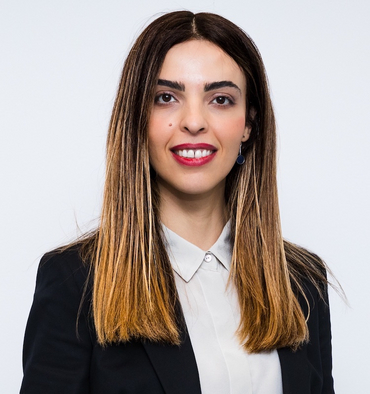
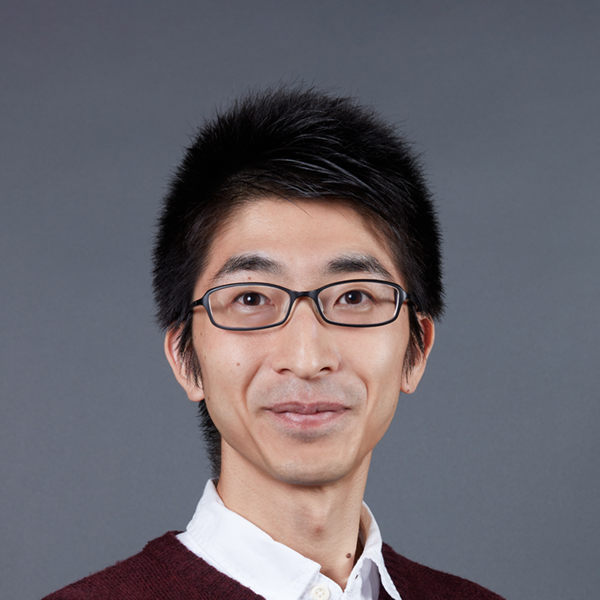
Organizers


Program Committee
-
Gianluca Aguzzi (Alma Mater Studiorum, Università di Bologna, Italy)
-
Medina Andresel (Austrian Institute of Technology, Austria)
-
Radu Calinescu (University of York, UK)
-
Louise Dennis (The University of Manchester, UK)
-
Ivana Dusparic (Trinity College Dublin, Ireland)
-
Ilias Gerostathopoulos (Vrije Universiteit Amsterdam, The Netherlands)
-
Holger Giese (Hasso Plattner Institute, University of Potsdam, Germany)
-
Steven James (University of the Witwatersrand Johannesburg, South Africa)
-
Philipp Kogler (Siemens AG, Austria)
-
Anne Koziolek (Karlsruhe Institute of Technology, Germany)
-
Raffaela Mirandola (Karlsruhe Institute of Technology, Germany)
-
Sarita Paudel (IMC Krems University of Applied Sciences, Austria)
-
Lucas Sakizloglou (Brandenburg University of Technology, Germany)
-
Konstantin Schekotihin (University of Klagenfurt, Austria)
-
Stefan Szeider (TU Wien, Austria)
-
Danilo Valerio (Siemens AG, Austria)
-
Stefan Wagner (Technical University of Munich, Germany)